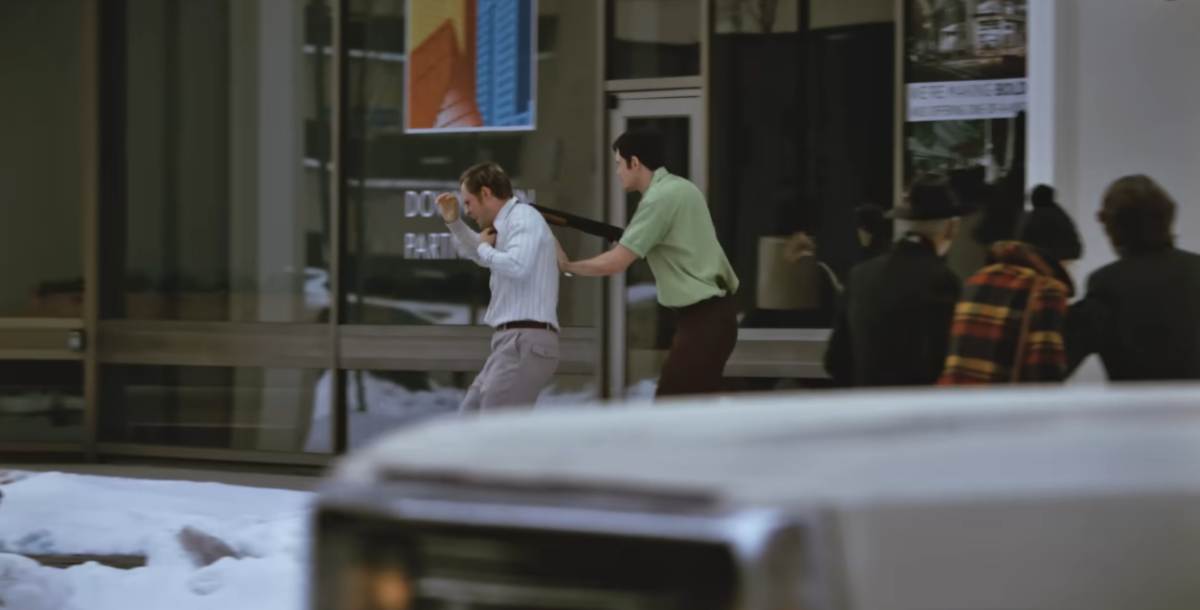
This unorthodox and darkly comical 1970s-set thriller is based on the true story of Tony Kiritsis, who kidnapped his bank manager under the impression that he’d been cheated on a mortgage deal. But the tension of the plot is literalised when he wires a shotgun to his hostage’s neck as a ‘dead man’s switch’, thus binding the two of them in a taut and inescapable embrace.
Given the precipitous decline of the reputation of banks in the intervening decades, Kiritsis often comes off as a put-upon anti-hero in the vein of Dog Day Afternoon’s Al Pacino, who even plays a supporting role here as the hostage’s stubborn father. But there are also shades of 1958’s The Defiant Ones, as the pair can’t help but get to know each other better than they’d have liked.
Cinematographer Arnaud Potier strains for that bleak colour scheme so beloved of ‘70s Hollywood, although his period loyalty is checked by our contemporary aversion to too much contrast. So there’s an immediate tension between the time of the film’s setting and of its making, tinged with an acknowledgement that gross inequality has still not gone out of fashion.
Editor Saar Klein cuts between the events at the bank, where the plebs are generating the action, and the cosy resort where Pacino’s smug, indifferent broker abuses the lap of luxury with an almost fetishistic detachment. Even the way he orders his lunch has an obscenity about it.
Within scenes as well as between them, Klein leapfrogs from one character’s perspective to another’s (sometimes by switching film stocks), encouraging us to see everyone’s point of view and make up our own minds about what’s happening rather than preach a righteous gospel at us.
Austin Kolodney’s cautiously tense script is devoid of fat, cranking the plot like a coke-addled metalworker, and revealing character through action instead of wasting its valuable time on extraneous scenes and superfluous one-dimensional mouthpieces. It shares not only this narrative approach with Sidney Lumet’s 1975 classic, but also its subtle use of dark humour as the antagonistic protagonist fumbles his way around his amateurish plan, beset on all sides by cruel twists of fate as much as his own cock-ups.
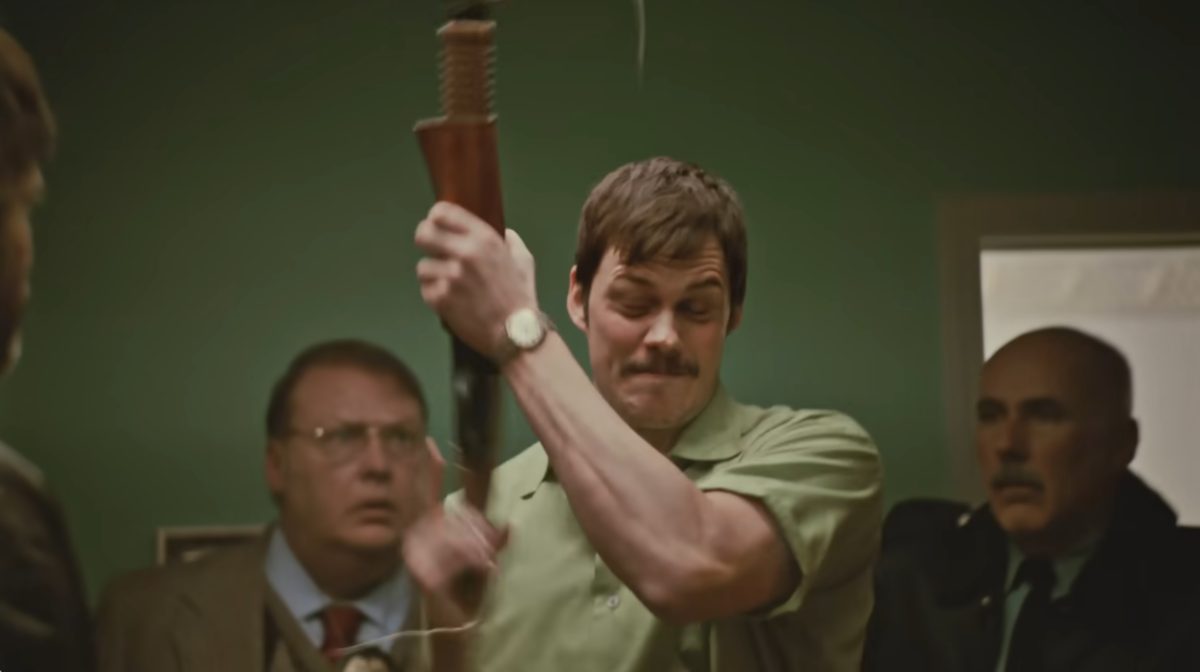
Bill Skarsgård’s ever-twitching, Action Man eyes are the only minuscule releases of tension in the coiled spring of his personality. His voice cracks just often enough to impart understandable emotional motivations that rescue him from mere villainhood, even if his later submissions to celebrity ego mean that you can’t in good conscience call him a hero.
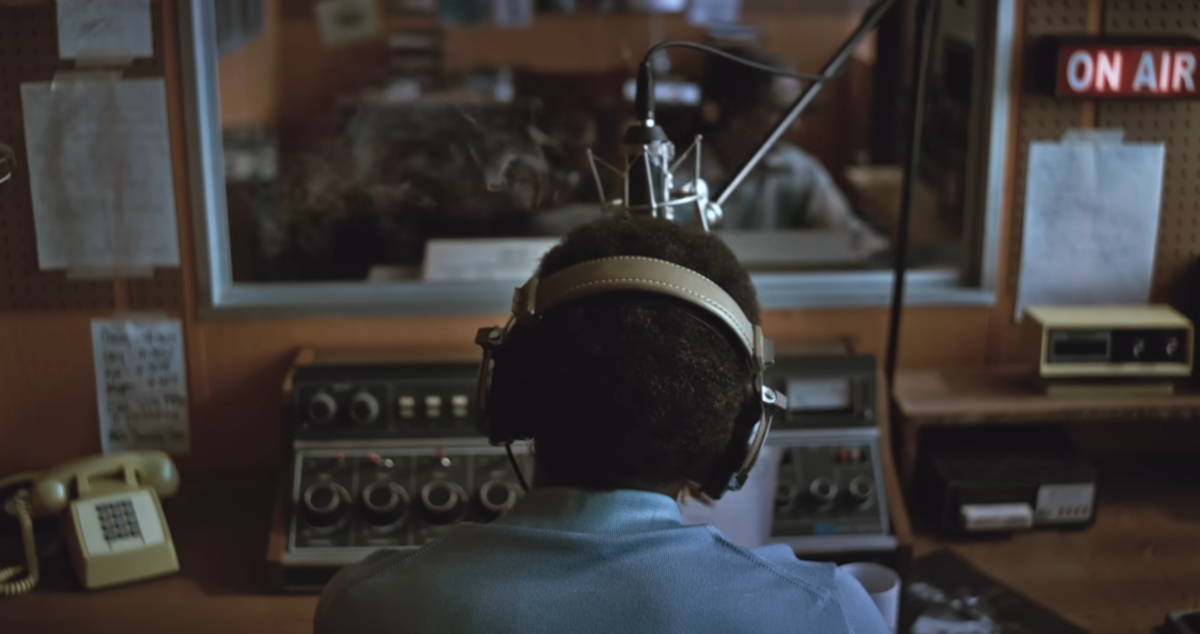
As well as playing a direct role in the plot, Colman Domingo marshals the magnificent period soundtrack as the music supervisor’s on-screen avatar, a mellifluous local DJ slyly commenting on both action and setting as a similar Greek chorus to Samuel L Jackson in Do The Right Thing. Indeed, Danny Elfman matches him beat for beat with a moody score redolent of fusion-era Miles Davis.
The supporting cast perfectly embody the cynicism of the world against which Skarsgård is so aggressively rebelling: Dacre Montgomery’s hostage is very internalised but just as sympathetic as his captor; Cary Elwes wears his badge of ineffectual police authority with a world-weary sigh; Myha’la gaily throws morality to the wind as the ambitious cub reporter on the scene.
On paper these are all archetypes of the kidnap movie, but on film they feel real. Perhaps ironically, the self-indulgent theatricality of his later career makes Al Pacino stick out like a sore trigger finger in this naturalistic landscape. However, even he retains enough psychological truth to keep it as real as everyone else, where necessary with some pretty ice-cold discipline.
Director Gus Van Sant has form in blending the serious and the absurd in ways that can set the audience’s teeth on edge (exhibit A, Your Honour – his atrocious remake of Psycho). But under these heightened criminal circumstances, his wryer instincts are kept at bay by some expert deployment of the visual language of the genre, as well as by the sincerity of the performances.
Dead Man’s Wire is a gripping and unobtrusively intelligent thriller whose conflation of sublime drama and ridiculous comedy is a balancing act worthy of the New Hollywood greats to whom it brandishes its artistic and thematic debt like it’s an American Express card.
-Stew Mott-