
 In a moment of darkly comic madness, a primary school teacher gets so frustrated with the one endlessly disruptive pupil in her class that she decides to lock him up in her basement until either he calms down enough to learn, or they forge some kind of ersatz emotional bond.
By making Saoirse Ronan’s embittered educator the heroine of the story, the film clearly sympathises with anyone who’s ever had to deal with an annoying child who’s impervious to anything short of nuclear pacification techniques, and that probably includes many parents as well as teachers.
Under Jonatan Etzler’s frantic but controlled direction, the competing strains of the different characters’ needs are wound tight as violin strings, while keeping the protagonist’s needs at the centre despite her criminal choices. But when an Ofsted inspection legitimises her unorthodox methods, we stifle chuckles at the leaden irony, a welcome antidote to the implausibilities of the plot.
Nea Asphäll’s camera glides along ominous orchards or stalks its heroine as she chases her charge before craning upwards to punctuate her isolation, all in splendid mockery of bog-standard thriller technique. But much of the rest of the picture comprises close-ups of Ronan’s frazzled features as she silently contemplates the consequences of her actions.
The lighting is kitchen-sink drab, the colours muted; so this is a familiar but not comforting environment, where patience is going to be severely tested. From bar to bar, Chris Roe’s Jekyll-and-Hyde music score shifts from thumping, slasher-movie strum-und-drang to the melodic light-heartedness of a jaunty flautist.
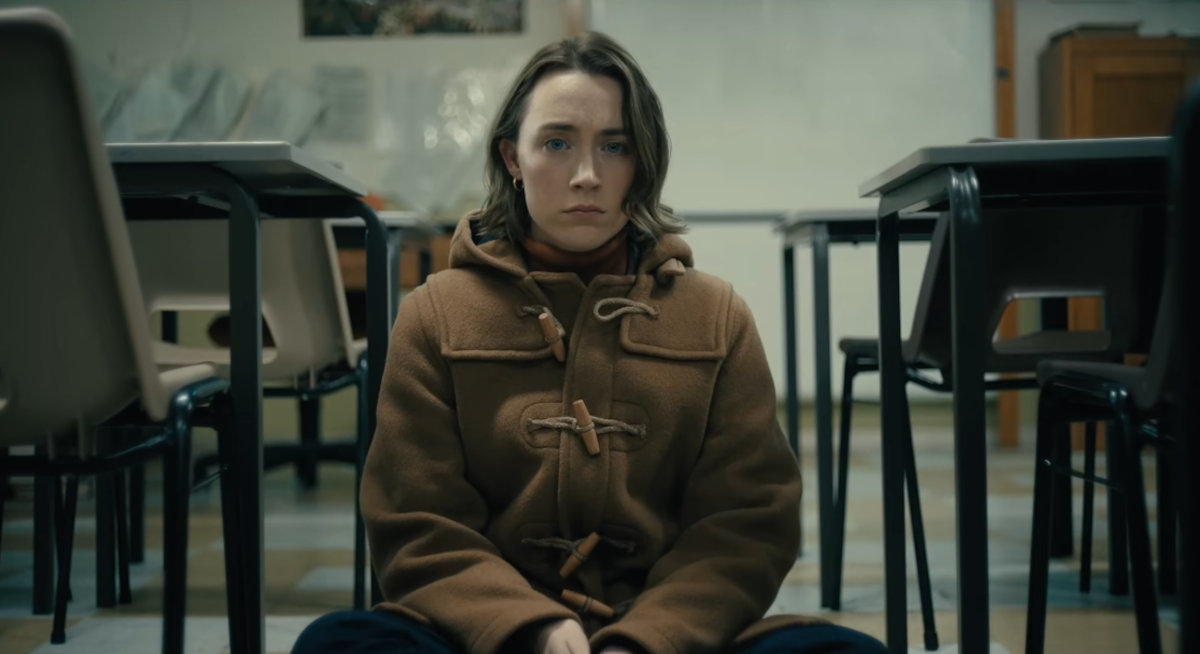
Saoirse Ronan is a model of oppressed professionalism, clutching her dark orange cardy around her shoulders like a last vestige of armour, or cringing under a table because she knows she’s been a naughty little girl herself. Her voice is an enervated hiss as she paces her classroom or her work-in-progress house like another caged beast. She just wants to teach, and the rest of her class seems at least open to the possibility of learning.
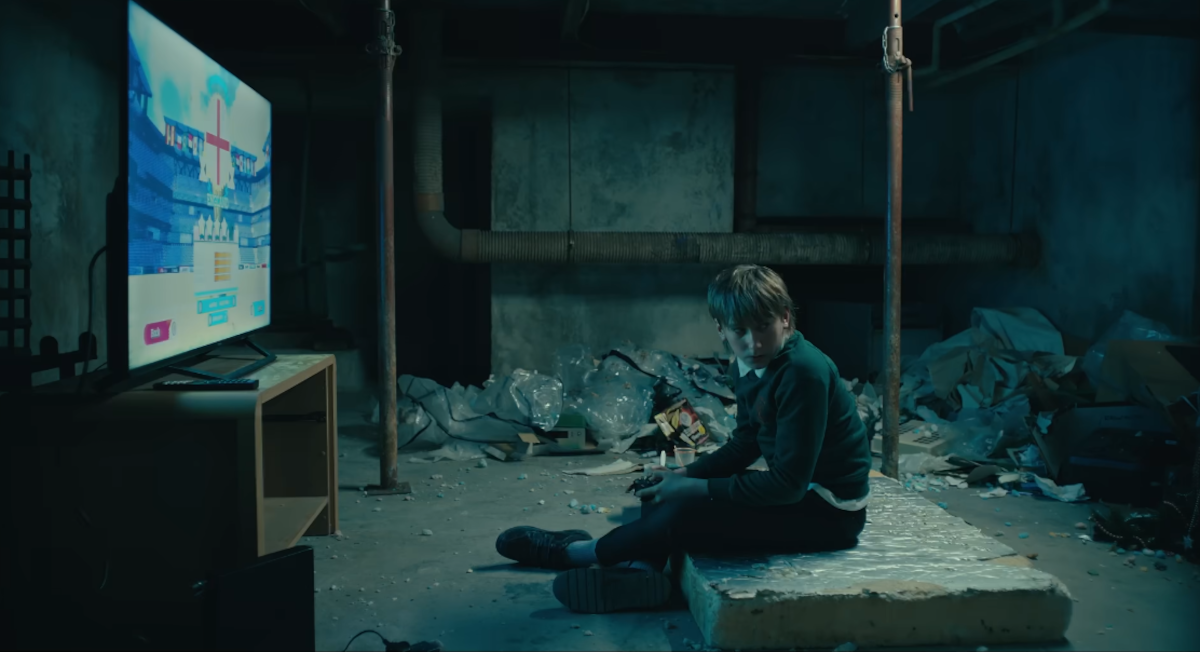
The obnoxiousness of her captive Danny (a suitably feral Eddie Waller) slowly sucks all the oxygen out of the room while the other kids shift in their seats or turn awkwardly to look at him. He’s intense and troubled, but quite articulate in his Cuckoo’s Nest rebellion, and his disruptions are low-key but constant, just Chinese water torture until he pushes things (and one of his classmates) a little too far.
As Pauline, the unfortunate victim of Danny’s acting-up, angel-faced Nia Brown makes a dangerously precocious teacher’s pet, whose infatuation with Ronan successfully straddles a pretty thick line between adorable and creepy as she commandeers the driver’s seat during the second act.
Bad Apples starts off as an edgy thriller analysing society’s rules about the particulars of adult-child relationships. Although its heart softens a little as it grasps for hope in a desperate situation, its sense of the absurd also ripens as it concludes with some enjoyably on-the-nose satire. Perhaps the only alternative it could come up with for a climax was something unspeakably dark.
-Stew Mott-