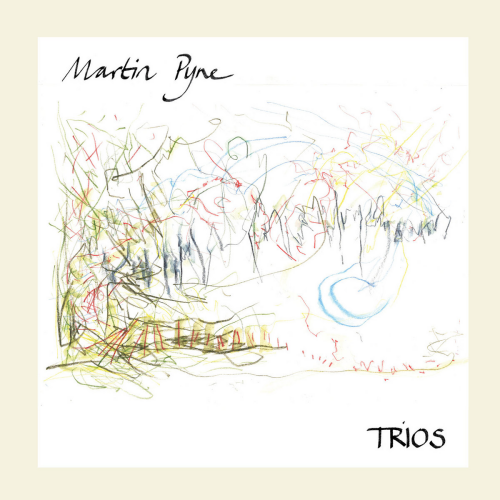
 Vibraphonist and percussionist Martin Pyne has appeared many times in these pages over the years, often as part of collaborative efforts but always with exciting results. For me the vibraphone is too often used as an embellishment; so here Discus has chosen to release a two-disc set of Martin’s work with two different trios which shows how Martin’s deft touch and willing collaborative spirit draws the vibraphone front and centre where it belongs.
The album starts with a disc of nine pieces from the Vampire Coast Trio; this sees Martin teaming up with Michael Bardon on double bass and Johnny Hunter on percussion for a set that is big on space and variety of sound. The way the vibraphone shimmers into the spaces left by Michael’s mellifluous bass and Johnny’s ever-searching percussion means that there are very satisfying routes to follow, a less is more introduction that allows the trio to build on their natural intuition and the follow the songs’ whims.
The percussion is intensely varied, with bowed cymbals appearing on the playfully abstract “Vampire Coast”. The bass and percussion lay a bed over which Martin displays the limits of the instrument, pairing honeyed runs with piercing single notes while the bowed bass meanders in its company. The following “Listen To The Wise Man” is fierce in comparison and shows their unwillingness to compromise. You don’t expect such strength from the vibraphone, but backed up by the clattering train-ride drumming and judicious bass, it pushes the limits.
This album isn’t just about the vibes though, so “Cooking For One” finds Martin playing the balafon, its pretty tones bringing a warming African feel. The running order takes in all manner of atmospheres, so the slow and sparse “Asrai” finds them revelling in the vibes’ delay and the bass is so deliciously thick you could spread it on a scone; whereas the longform “Blackwell Tart” is an irresistible bass- and drum-led piece with hot motifs coloured in, circled and returned. The mid-point breakdown is the polar opposite, a barely there moment of breath and tension that gradually is subsumed.
It is lovely that there is no reliance on structure and this is possibly down to Johnny’s percussive approach. This means that you really don’t know what to expect from track to track; “Spinning Yarns” is kind of pointillist with single sharp notes for both bass and vibes with the disc ending on the light, summery and scattered excitement of “Song For Walt Dickerson”, which is a perfect vehicle for what the instrument can offer and a great way to end this section.
The second disc contains eleven pieces from the Chalk Horses Trio and here Martin is joined by his Ripples compadre David Beebee on Fender Rhodes piano and drummer Angus Bishop, who brings a more rhythm-orientated sensibility to the conversations between vibes and Rhodes. The similarity in tone between the Fender and the vibes means that there is more of a feeling of conversation between two friends. The songs are a little more structured and there is more of a groove riding throughout.
The percussion is a bit more demanding of the protagonists in some pieces and pushes the songs on, but is also perfectly capable of sitting back and lending texture, as on the balafon-based “Chalk Horses”. The more dampened sound of the balafon is an interesting counterpoint to the Rhodes and the hammered repetition certainly tests the concentration. The Rhodes is almost guitar-like and this sense of shape-shifting is prevalent throughout.
“The Ghosts Of Wharam Percy” has a more astral searching quality, while the snaking jazz groove of “Fishing In Murky Waters” finds the Rhodes lending a bassy strut that is definitely dancefloor friendly. The electric organ changes appearance as the album progresses, lending a gauzy drift to “Vesper” and a something of a ’70s lilt to “The Wife’s Lament”.
The majority of the pieces here are collaborative co-writes, whereas it is about half on the Vampire Coast disc; and there is something of the classic trio format here. The reliance on a motif around which the three dance is more prevalent and the urge to groove is irresistible. There are what sound like woodblocks on “Shadow Play” and this is wilder and more textural; while closer “Farandole” has a beautifully undulating rhythm that pairs urgency with subtlety for the finest of conclusions.
What this collection goes to show is that the vibraphone is an excellent instrument for taking the lead; in the right hands with the right sympathetic accompaniment it is beyond compare. It seems to merge with Martin and his fluency is a joy. I also like the fact that the track “The Green Man Dances In Mud Lane’ is set not far from where this is being typed, and this love of nature and the ancient traditions is a subtle undercurrent to the music.
-Mr Olivetti-