

The stakes are raised to even more diabolical levels in this sequel to the gleefully violent and acutely socially aware 2019 horror hit, in which Samara Weaving’s plucky bride evaded the murderous attentions of her new in-laws. This time, she teams up with her sister (Kathryn Newton) against a whole illuminatum of super-rich families seeking to consolidate their power by any means necessary.
Films
92 posts

The uncluttered plot has a stronger throughline than in many such superhero epics, demonstrating commendable reluctance to pin the fate of the entire universe on her admittedly invulnerable shoulders.

..this time their epic, sprawling mode of storytelling details a real life – that of Ann Lee, eighteenth-century founder of the Shakers religious sect, whose dramatisation here borders on fundamentalist propaganda.

...operates on a smaller scale than previously, dealing with stand-up comedians as opposed to rock stars (A Star Is Born) or master conductors (Maestro). Thus it feels like a return to the roots, an origin story for an ordinary but talented Joe who gets his break. He’s more interested in the neurotically funny camaraderie of a street-level scene, rather than the curse of individual high-functioning genius.

To their credit, the film-makers at least try to build a more interesting arc for its central character than the simplistic 1980s cartoon ever bothered with; then it blows up his colourful world into three dimensions, telling his tale in a mostly playful register cribbed most obviously from Thor: Ragnarok.
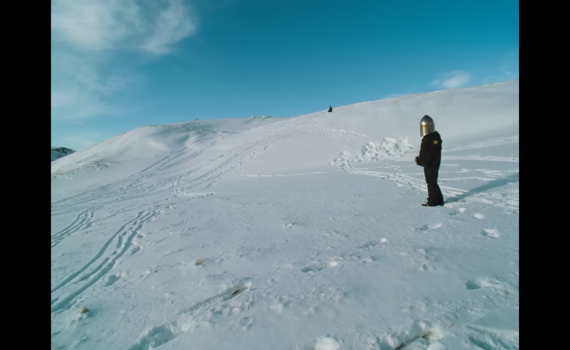
From the very first shot, the director / cinematographer wreaks destruction upon the sanctity of the family unit, even affronting his own characteristic practice of telling his stories through a series of almost still images held slightly too long to be comfortable for the viewer. Pálmason trusts our natural curiosity and filmgoing experience to help us look for the telling detail in his squared-off frames.

...feels less like a moralising history lesson and more like a pained cry of remorse, whose cinematic language has the steely nerve to ask the hard questions and refuse to answer them for you.
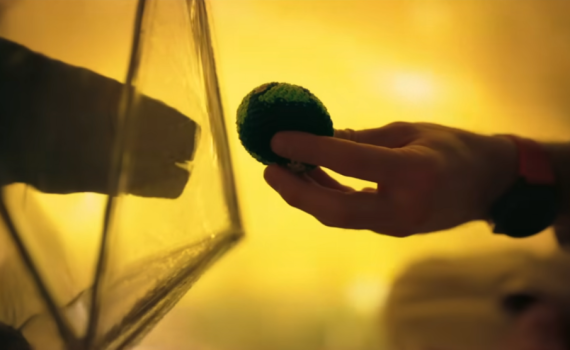
...a crowd-pleasing and at times genuinely wondrous mixture of scientific curiosity and human warmth, speaking a common language of optimism in the hope of rising above the din of a real world desperate to destroy itself.
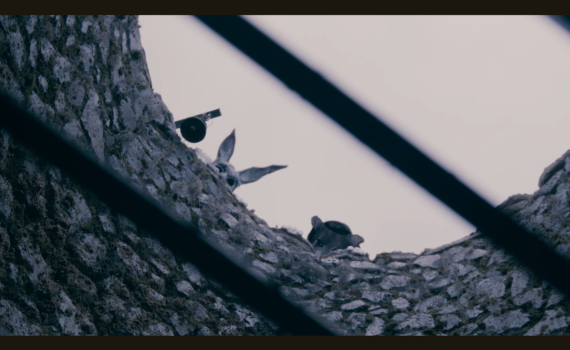
Five strangers who have all experienced various forms of extreme trauma have all come together to attend a group therapy session run by the ominously-named Dr Hedonia. This gives them all the opportunity to tell their stories in turn — which gives us the opportunity for a neat new anthology movie that also clings to a single story, straddling the divide between the two forms.

The Gothic romance of James Whale’s 1935 horror classic The Bride Of Frankenstein is drastically relocated to Prohibition-era Chicago and New York, although that element of camp which made the original such a beloved cult item remains intact, and the new setting offers a sly metatextual nod to the era in which it was made.

...the latest in the V/H/S series -- the eighth, in fact, which is impressive for a series devoted to the found footage format, which has long had its day. In fact, calling them VHS just seems weird at this point, as the traditional main audience for new horror movies have probably never used a VHS machine in their lives, and the letters VHS probably mean very little.

...as stylish and well executed as the crimes it depicts, while revealing the weaknesses in the chains binding its litany of incident together. But believable characters and a sly sense of humour lubricate its procedural plot, easing us around its numerous chicanes without diluting their thrill factor.

Park Chan-wook cooks up another idiosyncratic blend of thrills and satirical dark comedy with this sublimely ridiculous tale of a newly redundant paper manufacturer so intent on getting his next job that he’s prepared to terminate the other applicants… with extreme prejudice.

Nicolas Winding Refn’s Pusher trilogy, recently released in a handsome blu-ray slipcase set by Second Sight films, not only offer a hectic thug’s eye view of Copenhagen low-life, they also ask two very important questions. One, who is the titular pusher, and two, what does any of this have to do with a Japanese video game auteur (OK, maybe that one’s just me).

The film articulates the emotion of grief in all its slings and arrows, with a dedicated and sometimes painful sense of reality. It reminds us that, while Shakespeare’s work may be immortal, in his life mortality lay all around him.

With cosmic horror having made something of a sly comeback in recent years (as the malign influence of HP Lovecraft has given way to the Thomas Ligottis and Laird Barrons of this world), there’s never been a better time to immerse yourself in the secrets of this strange, physics-and-architecture-defying house and its wonderful gallery of grotesques for a unique slice of surrealist horror.

Noah Baumbach invokes the self-reflexive spirits of all the great directors who’ve made movies about making movies with this great-looking but languorous and elementally compromised comedy-drama that follows a movie star (George Clooney, by the look of it playing himself) and his forbearing agent (Adam Sandler) on a tour of Europe that soon ripens into a journey around the interior of his own navel.

To be fair, you can see why this film would have been annoying / perplexing to reviewers back in 1981, and many of those issues remain. It is genre-(and gender-)bending in every way. Is it a monster movie? A psychological thriller? A spy film, even, with heavily codified Cold War chic?