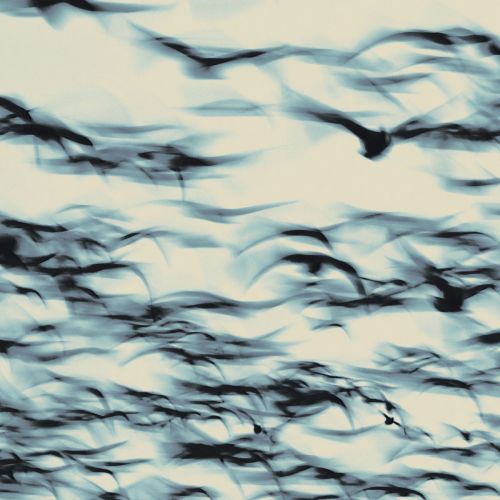
 Montréal-based quartet Bellbird take their name from one of the loudest birds yet discovered, and that sense of beauty and power goes part way to explaining the appeal of the group. Consisting of bass and drums with alto and tenor saxes, they merge outré jazz with an explosive and rhythmic momentum. Having played together now for over five years, The Call, their second album, consolidates the strengths of their self-released debut.
The twin reed attack merges perfectly with the ferocious punk rock drum vibe on opener “Firefly Pharology”. If you imagine a post-hardcore band had ditched guitar and voice and replaced them with two saxes, this is the sound you would have. The interplay of the reeds is really natural and they fill in for each another covering a wide range of tones and are not afraid to change things mid-flight as a air of repetitive notes tugs at one another like two dogs with a rope.
On “Murmuration”, the drumming is intriguing; at times there is an awkward swing that seems to affect the horns causing them to lose concentration, making them drowsy and looking for a different way to react. All the while the hobbled rhythm section piles forwards, twice as fast, relentless in its attack. They can slow things down though and “Soft Animal”, as you might imagine, has a sleepy late-night vibe, proof that there is more strings to their bow, while “Blowing On Embers” is more abstract with a sense of tension that the rhythm section builds slowly. It feels regimented, with the drums insistent and the reeds subtle. It doesn’t have the righteous fire, but appropriately more of a slow burn as it starts to dissolve, a patter of feet across hot sand. The brief, cacophonous finale spins in frustrated circles as notes harry one another.The changes of pace and of texture appear just at the right time and it seems to be down to the bass and drums to be the directional force, with “Eternity Perspective” taking on a bit of a swing but with a satisfying textural element, while “Phthalo Green” is more melancholy. In fact a lot of it is very far from jazz; the dirty unstructured two-note ugliness of the title track insists on dragging the tenor out of the light, with the bass chords attempting to being some wistfulness that is surprising and welcome. It leaves the New Orleans heat and of the stoned and summery “Mourning Dove” to see us out; the reeds gradually losing it as the drums have holes battered in them.
As is often the case on The Call things start out one way and end up somewhere else, tone and texture wrung out and then reapplied. The quartet complements one another in a unique and personal way that draws the listener into their sound world. It gives up more with each listen and is well recommended.-Mr Olivetti-