Martin McDonagh’s latest stroll around his favourite theme of hilariously toxic masculine friendships finds him treading on a few real-life thorns of twentieth-century political history. Sam Rockwell and John Malkovich team up as a pair of ageing CIA agents sent to Coventry (well, Easter Island), where they can rifle through the spilled guts of their careers while the real action carries on without them.
While the skeleton of the plot is structured around political intrigue, a tangled web of ulterior motive and the prospect of a lukewarm war, the meat on its bones is the deeply compromised chemistry of our anti-heroes as they amble their way around this one last hurrah, in search of some kind of grace before going into that good night.
McDonagh’s typically fruity script takes the dry-witted disdain for the espionage business perfected by John Le Carré, douses it in the absurd dark comedy of the Coen Brothers, sets it alight with some coarse Scorsesian dialogue, then sits back to watch it burn the same way the US government did and still does to any countries who dare to defy its capitalist will.
He’s instructed his film editor to either tarry a moment or insert reaction shots during the many talking scenes, but for every half-dozen pauses meant to let the audience’s laughter die down, there’s one that hints at the genuine affection these two men have for each other. No matter how hard they’ve stuffed it down the back of their slacks like a 9mm, their humanity goes off when they least expect it.
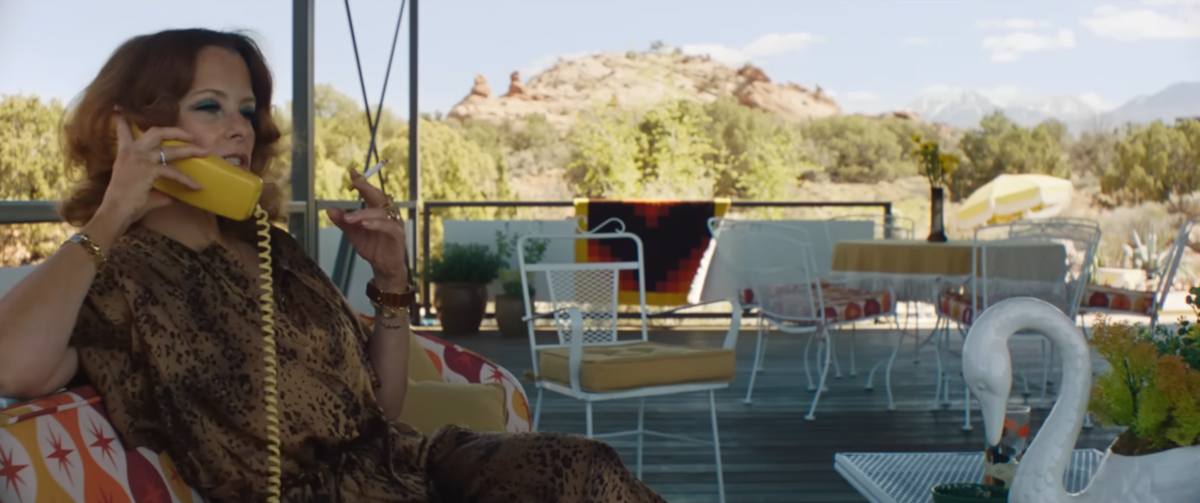
The gaudy browns, greens and oranges of the 1970s setting decorate both outfits and interior sets, but are muted by Ben Davis’s meticulous lighting. By day the sun floods the background so that close-up faces are hard to make out, and by night there’s a persistent visual balance, a democracy that reminds us that every pictorial element is in this shit together.
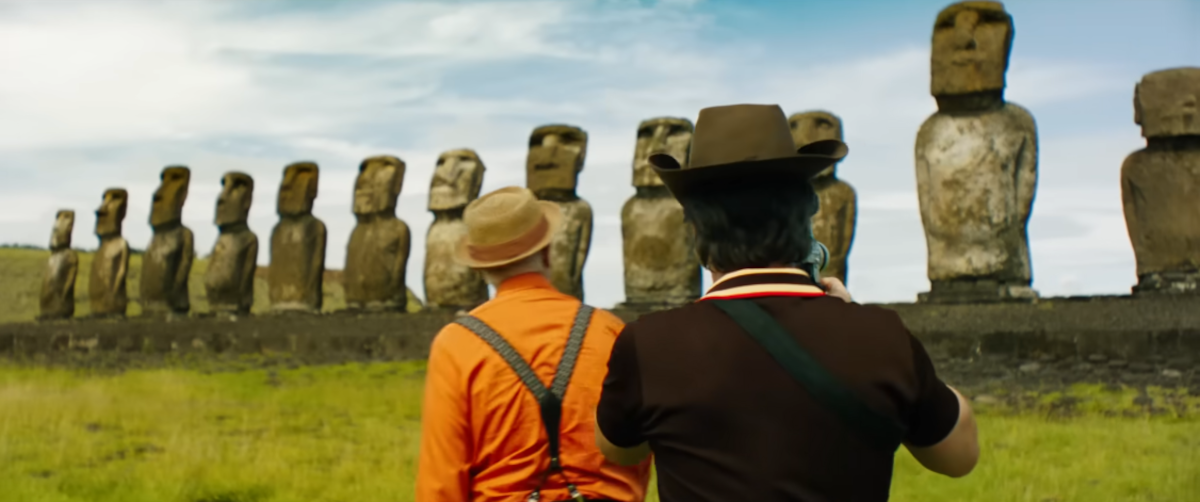
Malkovich’s insouciant candour and Rockwell’s irritable bluntness make for an exquisite cocktail, whose flavour easily lasts through the machinations of a plot as treacherous as the holiday-snap topography of Rapa Nui. Their awkward chemistry is as beautifully concocted as that of Colin Farrell and Brendan Gleeson in McDonagh’s previous works, and praise doesn’t come higher than that.
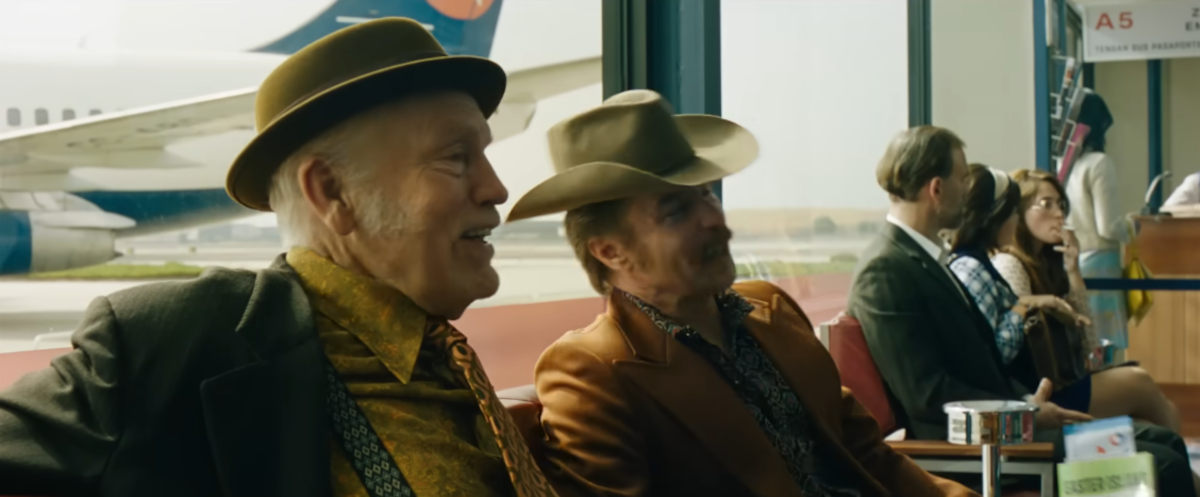
Malkovich’s voice cracks and undulates as if he’s recovering from a stroke, the only obvious clue to the cumulative and unbearable weight of his nefarious deeds; unless you count the cancer that’s eating his life away. In any case, he treats it as a licence to say whatever’s on his mind, even if it’s a threat to national security, and his wandering down this moral labyrinth is a fascinating watch.
As his pragmatic, long-suffering boss, Steve Buscemi is contained beneath a tidy ‘tache and a smart suit for the office, but his dialogue is carpeted with f-bombs. Like his charges, he can barely be bothered to maintain the ego of civilisation upon the id of the selfish and violent human nature he’d probably blame for government policy, if indeed the question were even asked of him.
Parker Posey as Rockwell’s wife is perhaps the most lurid character in the cast, sashaying around her swimming pool, fag in hand, her ginger wig clashing like swords with her blue eyeshadow as she spits catty remarks down the phone to her long-distance husband. All of which leaves poor Mariana di Girolamo to shore up the edifice with her doomed conscience, but still she makes light work of it.
Martin McDonagh is mastering the art of blending scabrous comedy with melancholically dignified drama until they coalesce into the same thing. Wild Horse Nine is often laugh-out-loud funny, yet suffused with the kind of philosophical sadness you find when you delve deep into your soul and find it wanting. The real mystery is that he’s alchemised this effort into an act of guarded optimism.
-Stew Mott-