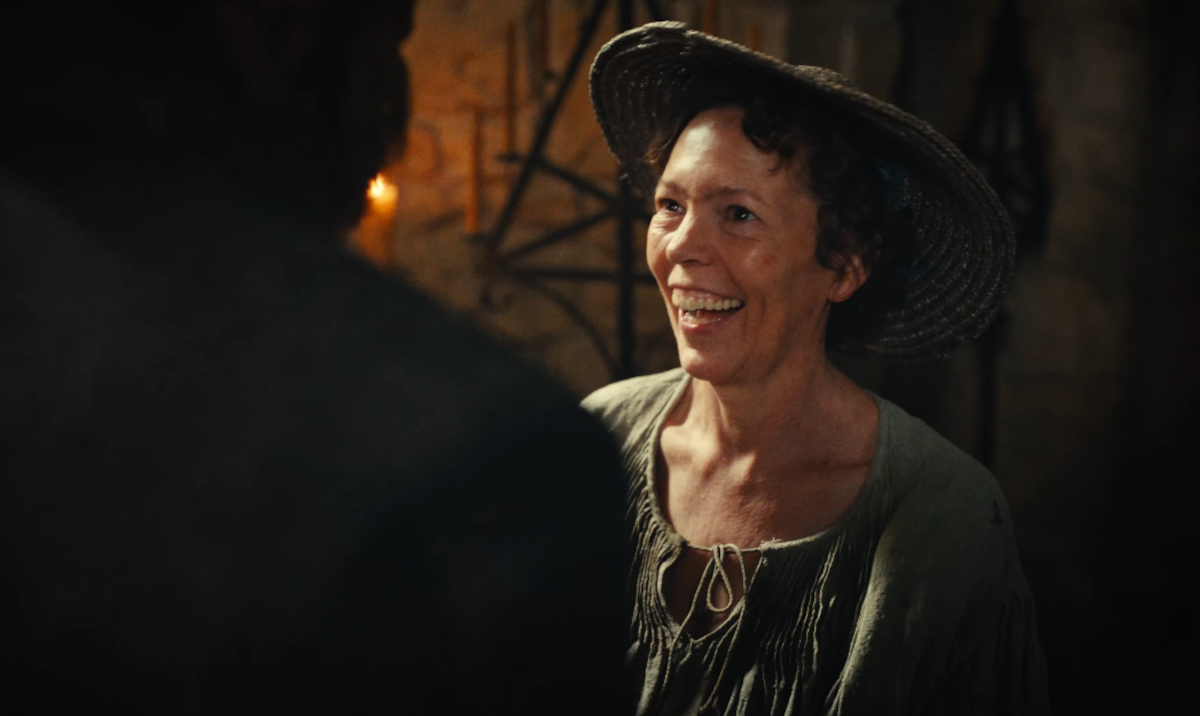
Olivia Colman lends her estimable talents, both comic and dramatic, to this endearing and hilarious fairytale for grown-ups. She plays a fisherwoman whose ripe profession ensures a certain amount of social ostracism in her tiny village community, and it’s only exacerbated when she asks the local basket weaver to build her a husband out of any bits and pieces he might have lying around.
The humour is ribald and knowingly anachronistic, reminiscent of Blackadder in its combination of historical satire and barely disguised dirty jokes, as the couple’s bed-breaking and very audible sexual adventures prompt a miniature revolution that could result in prelapsarian wooded bliss, or it could meet with a forest of stubborn and toxic denial.
Stars and supporting cast alike are costumed and made up to look less than their best, and this rejection of any hint of glamour not only roots the film more believably in its pre-industrial era, but also makes the point that one’s appearance (and indeed one’s personal hygiene) is infinitely less important than the content of one’s character.
The photography has a slightly bleached quality that limits strong colours to just a handful of sharp visual incisions into the mediæval gloom. Likewise, the interior sets swallow most of the light, and exterior street scenes have a rotting, dung-drizzled look that imagines a Hammer horror film as if directed by Robert Eggers.
Editor Sofi Marshall plays some ingenious thematic flams on her Avid, cross-cutting between Colman’s frustrated solitude and the weaver working his magic in an effort to end it. Anna Meredith’s folk-inflected music score can embroider the comedy with jaunty violins one minute and warn of imminent danger with strangled cellos the next.
While Alex Huston Fischer and Eleanor Wilson’s cackle-inducing script follows the structural simplicity of a story by the Brothers Grimm, much of the dialogue has the ornate wit of a William Shakespeare or Richard Sheridan comedy. But it also comes equipped with the outrageous double entendres of a Carry On film, not to mention a few choice Anglo-Saxon vulgarities.
As co-directors they deliver the verbal and visual gags with a light yet precise touch, their fascination with nature both human and arboreal emerging through a well-founded sympathy for the outcast as much as a mockery of the system that cast them out. Olivia Colman deploys her goofiest facial expressions and most accurate comedy timing when out among her disapproving neighbours, but when alone or with her woven lover the pong of all that sadness and loneliness overpowers the fruity tang of her self-protecting social interactions.
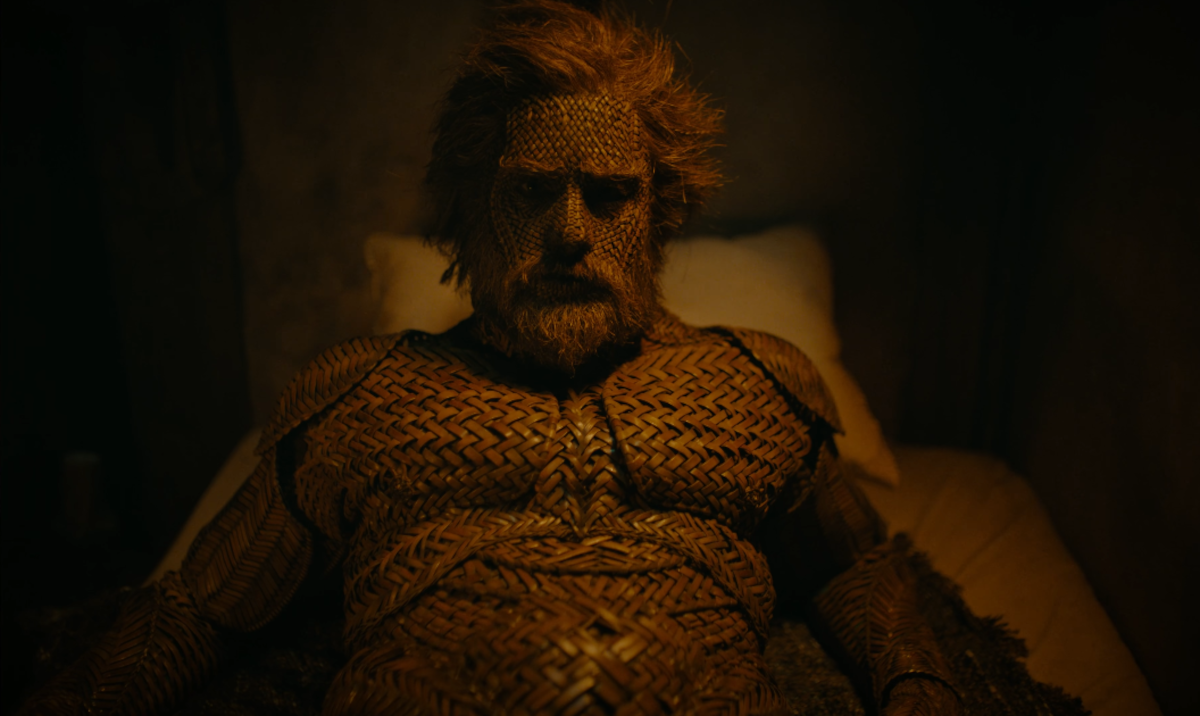
As the quite literal wicker man, covered in beautifully detailed make up, Alexander Skarsgård uses his eyes (the only visible part of him) to communicate an Edward Scissorhands helpfulness and sensitivity from beneath that sturdy surface. His is a rugged but healthy form of masculinity, vulnerable only to being taken advantage of by the selfish villagers.
Elizabeth Debicki’s quietly sardonic malevolence is amplified by her cod-Northern accent, which is a less obvious but equally effective choice than the usual villainous shorthand of plummy received pronunciation. In any case, she uses her carefully chosen words as a scalpel to gauge and then manipulate the needs of this close-knit community for her own devious ends.
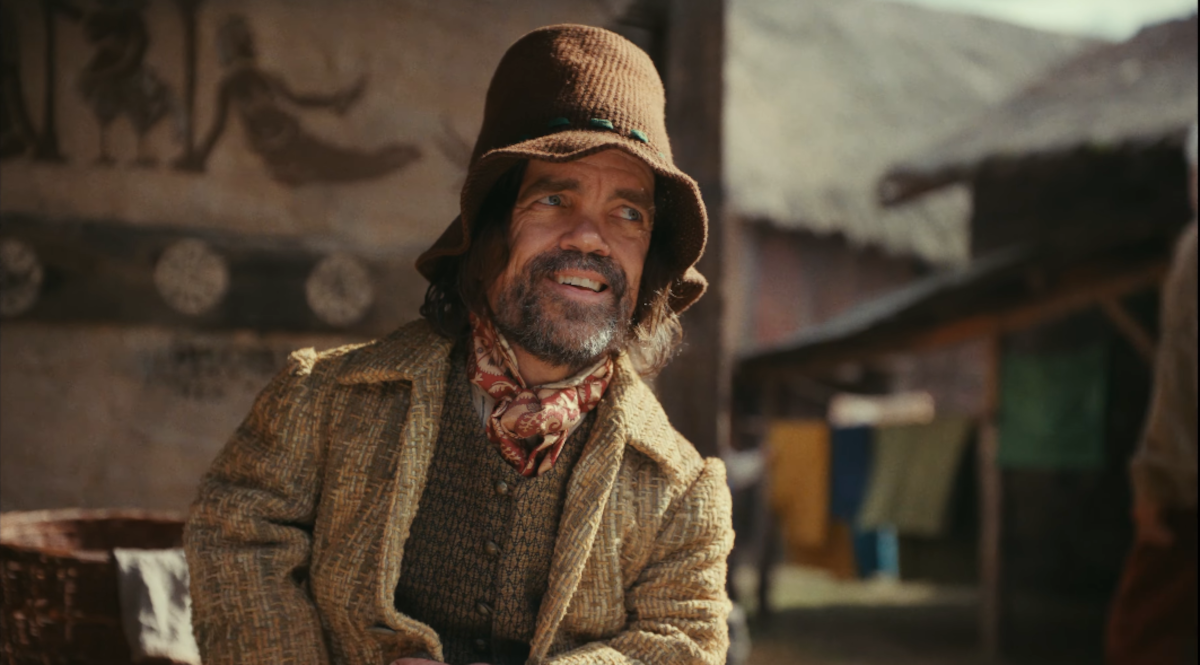
Out of a very motley ensemble, Peter Dinklage’s crafty but lovable basket weaver is perhaps the conscience of the movie, deftly holding one end of the film’s moral tape measure, while Phil Daniels’s horny, blokeish butcher tugs at the other end in between, making the kind of lascivious remarks that go down well at the local inn but would get him a smack in the chops anywhere else.
Wicker dives down the rabbit hole of its extreme metaphor for the pitfalls and pleasures of male-female relationships, gleefully subverting its otherworldly period setting to appeal to a modern audience who’d likely see themselves in these extravagantly designed characters anyway. It disguises some valuable observations beneath a veneer of heightened reality, but they ring just as true in ours.
-Stew Mott-