After a long break, Paweł Pawlikowski, Poland’s doyen of beautifully understated efficiency completes a trilogy of historical dramas with this pocket biopic that focuses on a road trip taken by Nobel Prize-winning writer Thomas Mann (Hanns Zischler) and his bohemian daughter Erika (Sandra Hüller), following the suicide of his son and her brother, through the proud ruins of post-war Germany.
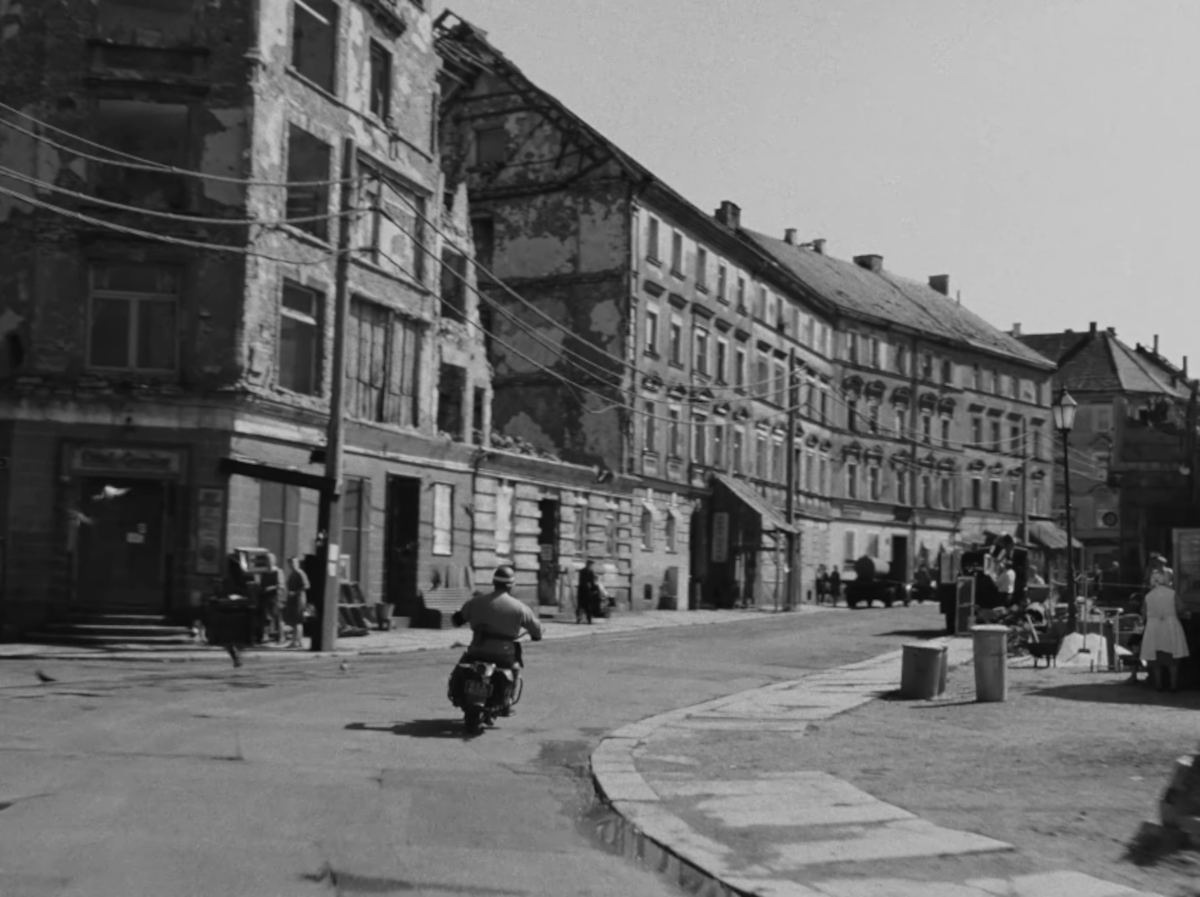
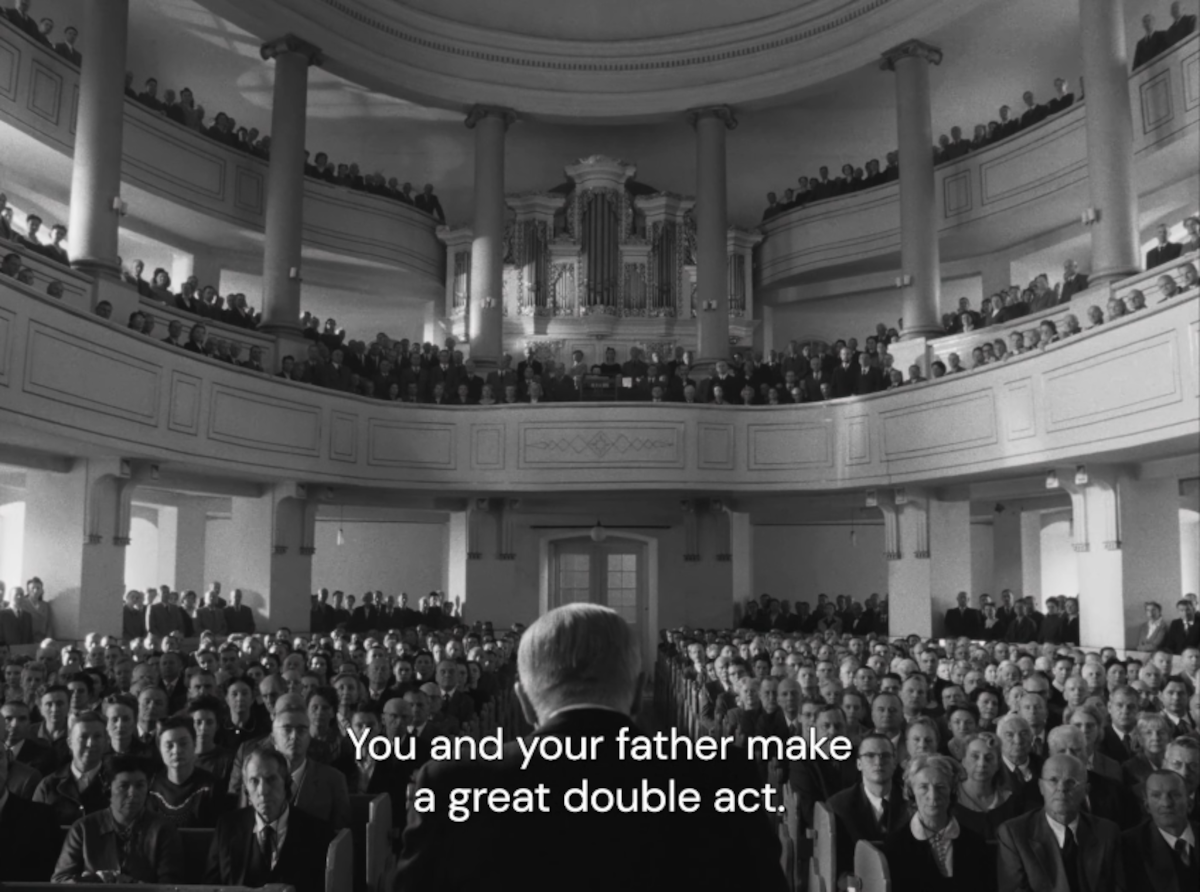
As with the previous two entries, Ida (2013) and Cold War (2018), the film is shot by regular collaborator Łukasz Żal in an eye-caressing monochrome that filters any misbegotten nostalgia for the past through the digital clarity of the present. Its many shades represent the morally grey viewpoints of the citizens of this newly-divided country, all of them forced together into a tight square frame that demands they take a fully black or white position on the chessboard of this difficult new history.
Elegant pacing results in long static takes that deny the characters any escape from the image, and even when the actual car journey begins, we’re trapped in the back seat like a restless child, silently asking irritating questions about what’s really happening beneath this stoic national surface. Mann orates before a vast audience in a large, ornate theatre, inter-cut with sloping angles on handfuls of attentive faces. These shots bear a resemblance to Nazi propaganda reels, albeit drained of the vicious passions of the Führer and his mindless followers. The voice of reason has returned, but relief is compacted into a passivity that could be reticence or simply Teutonic good manners.
The sturdy but delicate script (written by Pawlikowski in collaboration with Germany’s Hendrik Handloegten) pokes fun at the attempts of those around our central pair to get a straight answer out of them. Their questions are blunt and smugly asked, as if the political and psychological complexities of the Manns’ exile can be contained in a headline-ready soundbite. They respond with politely dry wit, negotiating the slippery slopes of their interrogators’ multiple languages with the dexterity of an Olympic skier, or the elastic elusiveness of a veteran ambassador who’s lost their country but not their sense of clubbable good humour.
Just as the dialogue switches from one tongue to another without changing the message, production designers Marcel Slawinski and Katarzyna Sobanska transform Weimar-era art deco ballrooms and institutional canteens alike into just another prison; even Żal’s generous depth of field leads only to a dead-end corner. The keening, arpeggiated chords of Marcin Masecki’s sparse music score insinuate themselves into the characters’ company now and then, seeking to communicate their mood, but resulting in honourable failure every time. Like the galleries full of clapping admirers Mann plays to, they echo but they’re not allowed to truly resonate, at least not until the very end of the film.
Sandra Hüller has considerable form in trapping an ocean of sentiment beneath a veneer of icy self-control, and her minuscule eruptions of disgust or grief are as fascinatingly precious as ever. Her performance may stare our greedy eyes down most of the time, but you get the impression that if she were to properly lose her rag, all of Germany would know about it. Hanns Zischler provides an equally stubborn head against which Hüller’s can butt, their reluctant adventure recalling Ingmar Bergman’s Wild Strawberries in its litany of missed opportunities for the real emotional connection one might expect a parent and child to take for granted.
His Mann observes the glamour of his own celebrity with a squint and a sidelong glance, his nose having smelt the bullshit from a mile away. And yet, he seems ignorant of his own personal pain, never mind that of his daughter, dismissing the recent family tragedy with an offhand psychiatric diagnosis. As a writer he may be a genius, but as a human being he’s as dumb as a Pfosten.
Caught between the dying embers of fascism and the initial sparks of communism, Mann is quietly painted as that most dangerous of animals – the free-thinking intellectual. Pawlikowski is well aware that such creatures are as endangered now as they were then. He has strangers applauding Mann as they pass, in much the same way as they might wave at the lions in a zoo.
Fatherland examines the fallout of the totalitarian near-destruction of an entire nation by focusing on one inter-generational conflict that also refuses to confront the rot in its soul. But the bigger picture is not blurred at the edges of the story – rather it surrounds the key players like shards of broken lens, always ready to draw their blood. And when the film’s subtle promise of catharsis is finally kept, it’s in a moment of such raw beauty that you yearn to sketch it before it disappears forever.
-Stew Mott-