
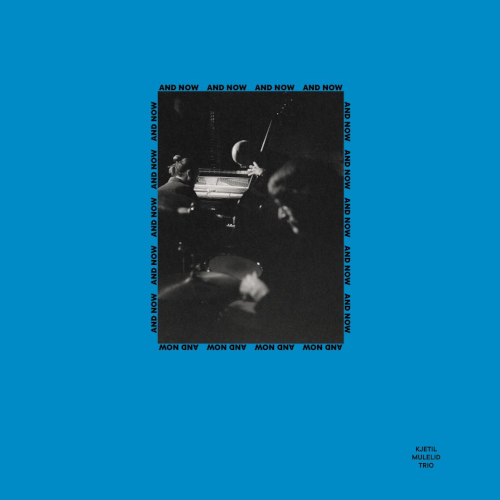
 Although the Kjetil Mulelid Trio has been recording since 2017, this is their first album with replacement bassist Rune Nergard, and continues their jazz-adjacent explorations with a light and adventurous sound that ushers the listener through landscapes familiar yet refreshed.
There is a real clarity to the piano; an open-hearted sweep that sounds like attempts to musically describe physical experiences. Elemental landscapes and sweeping vistas open up, always with a natural flow but sometimes meandering, taking a detour that slows the momentum, giving an opportunity to look around with detail.
Drummer Andreas Winther is particularly adept at providing this sort of texture and the rhythm section’s ingenuity means this is not just about jazz. In fact, “The Greatest Love” has a romantic songwriter’s sensibility; its easy radio melody is crying out for somebody to add lyrics and send it into the charts, but this lack of words allows the listener to paint their own picture. Although they are perhaps recognised as a jazz trio, there is much more going on here. The melancholy space of “Singing Sands”, with its hints at modern classical evokes a very different situation to the folky melody and repeating motifs of “Waltz For Agoja”, the subtle use of cymbals to enhance the joyful drive proving essential.There is more improv abstraction on “Any Day Now”, its stuttering rhythm and splashy cymbals taking the place of the piano for a while. Kjetil is clearly happy to stand aside and allow Rune and Andreas to test their mettle, ploshing around sharp and soft, satisfying cymbals crashes escaping into the light.
The album closes with something a little more rarefied, stripped-back, minimal, sparse and shy. “Sailor’s Song Part II” is a gentle closer, one that allows the free-flowing excitement of the past forty minutes to sink in and settle a little before the album finishes. Bjorn’s departure hasn’t so much changed the sound as allowed new avenues to open, but retaining their adventurous spirit. Long may this continue.-Mr Olivetti-



 There are four main ways of making music that sounds different to anyone else: by devising your own conceptual framework; using rare or unique instruments and equipment; developing an unusual approach to your instrument; or by training until your technique is broader, faster or more specialised than that of other players. Depending on your level of insecurity you may reinforce these with deliberate obfuscation, whether that entails removing the labels from your vinyl, claiming that you don’t understand or aren’t interested in your own process or ability, hiding your equipment or simply not answering questions. It depends whether or not you’re afraid of the competition or you think you’re the kind of person who’s only going to have one decent idea in your lifetime…