Hollywood’s fondness for eating itself results in a satisfying meal for once, as this crowd-pleasing biographical drama follows the legendary efforts of a struggling actor called Sylvester Stallone to get his spec script about a pug boxer given a shot at the big time made the way he wants it made.
Of course, the original Rocky had a semiautobiographical element already, as Stallone’s own professional trajectory would mirror that of his most famous creation. But even though this is to some extent an exercise in meta-textual nostalgia that introduces yet another dimension from which the star might be able to reflect on his own life, Stallone himself apparently had nothing to do with it.
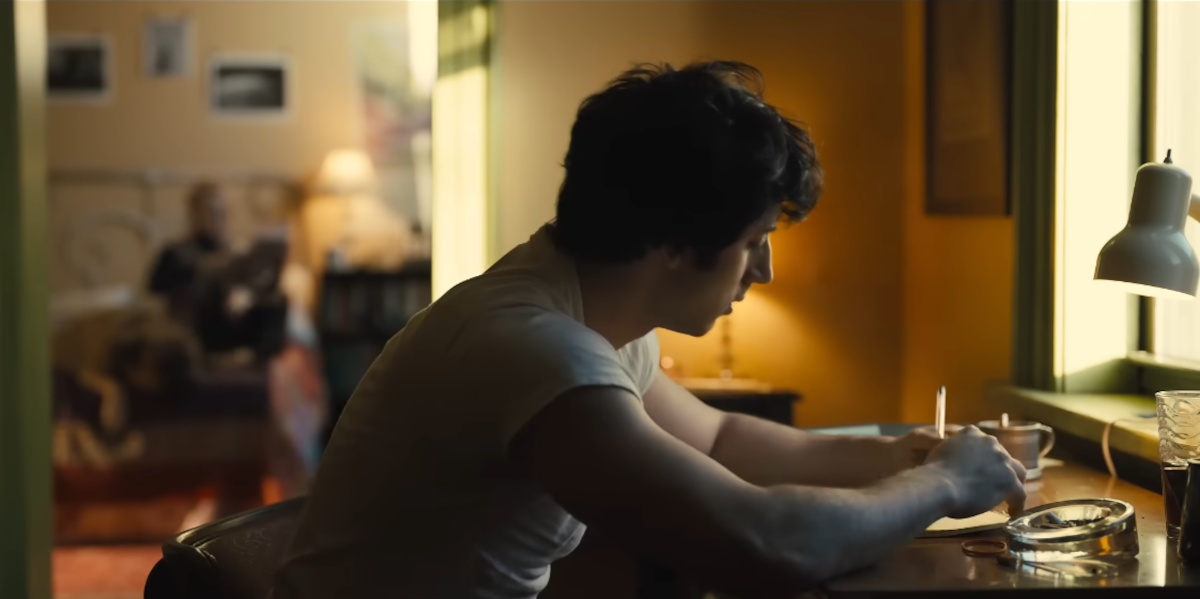
This imagined Sly spends endless hours in his dingy apartment in an insalubrious area of New York, rehearsing his lines despite speech impediments that get him dismissed from auditions so fast his head spins like it’s taken a right hook from Apollo Creed. The brief seems to be to portray Stallone and Rocky as the same person, separated only by their vocations.
But, in accordance with director Peter Farrelly’s background in comedy, the grimness of his impecunious circumstances is leavened with dry humour, mainly to sugar the audience’s palate, but also because it’s the only way to cope with the despair. However, the second-act shift into Hollywood deal-making bluster yields a few, more reassuring, belly laughs.
Peter Gamble’s script is structured as a DNA strand of endless parallels between Stallone’s life and his art. From adopting the homeless dog Butkus to demoting all the f-bombs into the more family-friendly euphemism “freaking”, the film provides a nice warm jacuzzi of familiar references for die-hard fans to bathe in.
The design departments have dutifully reproduced the egregious fashions and nicotine-stained décor of the mid-1970s, although they’re sanitised by Sean Porter’s clean, gently-shaded photography. It’s a neat visual representation of how Rocky the movie changed the pessimistic mood of contemporary American cinema with a single blow.
On the other hand, the soundtrack largely eschews a traditional Bill Conti-style epic score in favour of the same kind of period-accurate filthy funk and Philly soul that we heard on Rocky’s titchy radio. But as the film-within-a-film takes flight towards the end, our hero’s dream finally coming true, that’s when composer Dave Palmer starts hitting us in the ear with some bigger, bolder themes.
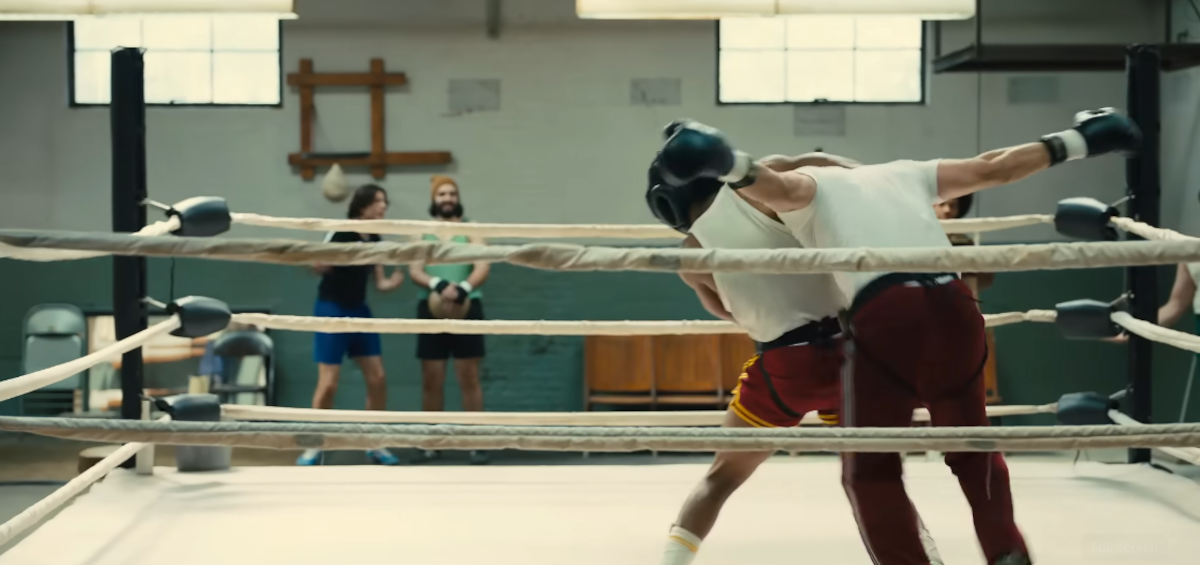
Farrelly directs the plot’s key moments – Stallone finding inspiration from the real-life Ali–Wepner fight, selling Butkus for cash to feed his nascent family, the perfectly reconstructed shoot – in much the same low key John G Avildsen did Rocky itself. This film’s homage goes deeper than merely dangling ‘member berries’ under the audience’s nose; it’s built into its very method.
On a purely technical level, Anthony Ippolito nails Stallone’s voice, appearance and mannerisms, not to mention every line delivery for Rocky Balboa himself. The warmth, authenticity, intelligence and stubbornness he brings to the always tricky role of playing a real and very famous person so transcends the unavoidably predictable screenplay that we can’t help punching the air at the end.
His endearingly clumsy attempts to romance his co-worker Sasha are knowingly reminiscent of Rocky winning the heart of his beloved Adrian, although AnnaSophia Robb plays her as more assertive and less mousy. Ultimately though, she’s relegated to the role of supportive wife and unpaid typist, and the rest of the supporting cast are equally starved of dimension.
From beneath a Brylcreemed coiffure and a Burt Reynolds moustache, Matt Dillon gives Sly’s dad Frank Stallone a grizzled surface charm, but he’s also picked up on the script’s subtle hints that he’s been something of a destructive force in his son’s life. Still, those hints don’t lead us up so dark an alley that we won’t accept him sharing in his ultimate triumph.
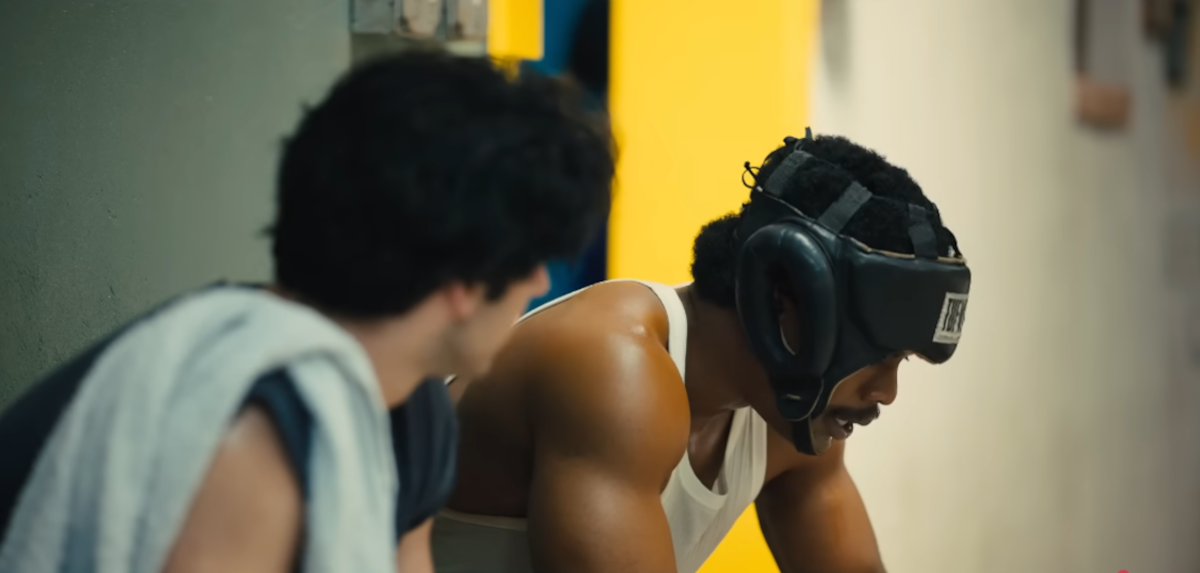
Stephan James certainly looks the part as Carl ‘Apollo Creed’ Weathers, but also captures plenty of the good-humoured swagger of both actor and character. Again, the idea seems to be that these actors were kind of playing themselves, art not so much imitating life as plagiarising it.
I Play Rocky pushes all the nostalgia buttons you’d expect it to push, but not always while wearing its clunky boxing gloves. If you already love the Rocky movies anyway, it’s going to be tough to resist this film’s barrage of emotional punches. It might not be a knockout in terms of cinematic imagination, but in terms of simplistic and self-aware determination, it definitely goes the distance.
-Stew Mott-